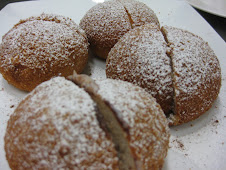
Check out this great blog to see what Eliza MacLean, Gordon Hull, Marla Thurman, and I did at our workshop during Slow Food Nation in San Francisco
http://fromwhencethesweetbirdsang.blogspot.com/2008/09/heritage-pork-sparkling-mead-workshop.html
Showing posts with label cooking. Show all posts
Showing posts with label cooking. Show all posts
Thursday, October 9, 2008


Monday, June 30, 2008
Pesce
La Cultura Gastronomica Della Costa Marchigiana
For two days we did nothing but cook some of the freshest, tastiest, and beautiful seafood of the March region with a wonderful Chef Massimo Bomprezzi. Massimo is a teacher at one of the finest schools in Italy, IPSSARCT “A . PAZINI” in Senigallia. Massimo did an excellent job organizing the class, and guiding us through production while we cooked all the delicate seafood to perfection, all in a tranquil environment.
Massimo made a couple of interesting points – We made many Brodetto’s – flavorful fish stews – but he explained that we would not use clams or mussels with the Brodettos because the fish swim freely, the clams are buried under sand, and the mussels are attached to something. They should not swim together in the broths.
He also said he does not like to use egg pastas with seafood. He prefers to use dry pasta for its flavor and texture with the fish and shell fish. We made:
Acciughe Marinate, Brodetto all Anconetana (Ancona Style), Brodetto alla Fanese (Fano Style), Brodo di Porto Recanati, Brodetto di San Benedetto, Vongole alla Poveraccia, Minestra di Pesce, Polipo con le Biete, Pesce alla Griglia, Raguse in Porchetta, Cozze Gratinate, Seppie con Fagioli, Stoccafisso all’ Anconetana, Tagliatelle con lo Stoccafisso, Zuppa Inglese, Granita all’ Arancia, Biscotti al Vino, Biscotti con le Mandorle, Cavallucci di Cingoli - Plus we made many dishes that were not on the menu like - Red Mullet Stuffed with Mussels and Wrapped with Guanciale, Baked Polombo - Shark, Mussels with Ray, Pannochie -Mantis Shrimp, Prawns, and Cozze in Brodo
When looking at the plan for all the weeks at the start of the course I was thinking that the class on seafood would be interesting, but not great. I was wrong. This turned out to be one of my favorite classes. Thanks Massimo!
Saturday, June 14, 2008
We are Tuscans!
For the region of Tuscany we had a fun energetic Chef named Marco Stabile who owns one of the top rated restaurants in Florence, Ora di Aria. We did one day of traditional Tuscan cooking and one day of modern interpretations of classic Tuscan combinations, and as you can see from the pictures we did some cool stuff. Marco really stressed knowing tradition and classical dishes before you started trying to changes dishes, create fusion dishes, or experiment without foundation. He stated “everything starts with tradition, and then you can evolve from that historical point”. He also said it was “molto importante to study the history of the town you work in” so you know what your customers likes, dislikes, and culture expectations are. “Tendencies are tied to the past …everything is tied together, know the history, but add your own style-understand the past –it helps you look to the future”. Marco had spent time working in a Michelin two star restaurant and is well versed in both classical and modern cuisines.
Although the Chianina is known for its Bistecca, Marco said he prefers its meat braised or Bolito because the animal is a very strong breed and develops muscle so the long slow cooking works well with its meat. He stated that Tuscans don’t like their desserts too sweet, and two of the most popular Cantuccini and Brutti ma Buoni are not overly sweet, but they do like to consume them particularly the Cantuccini with Vin Santo, a sweet dessert wine. Panforte di Siena is very sweet, but he said in Italy is usually just eaten around Christmas. Marco explained that the north of Tuscany is influenced by Bologna and uses fresh egg pasta, south of Florence the region does not use much fresh pasta and uses more vegetables, stews and grilled meats. The famous soup of the region Ribollita has many variations and the ingredients change with the season. Marco did a cool thing and took parmesan rind that had maybe a 1/8 inch of cheese on it and baked them until they were puffed up and crunchy, and really tasty. He said it is cool to dice them and use them for croutons.
Tuscany gets all the press, and it is easy to get jaded and think it is overblown. But, there is something about the region that is regal and distinct. Driving through Tuscany you feel as if the countryside has been manicured and prepared for your visit. Perhaps it is the contrast of the beautiful golden rolling hills, the tall coned shaped green Cypress trees that jut high above the fields, the hilltop towns, and the old stone farmhouses. Whatever it is the region has an undeniable presence.
The Etruscans cultivated the land in what is now Tuscany 2500 years ago. Today the region is full of tradition and produces many products that are known throughout the world. Although the region is rich in gastronomic products it is known for dishes which are humble, simple in composition, and often making use of “leftovers”. One notable exception to this rule is the famous behemoth Bistecca alla Fiorentina, the great grilled steak from the Chianina cow. Tuscany is known for excellent cured meats like salumi, prosciutto, and lardo de Colonnata from Carrara, a delectable cured fat that melts from your body temperature as you eat. There has also been a revival of a breed of pig called the Cinta Senese which is considered to have superior quality meat for curing, in our region we may compare the qualities of the Ossabaw with the Cinta Senese. The cheese produced in Tuscany tends to be sheep’s milk cheese and can range from fresh and delicate to aged and piccante.
Most people know about Tuscan bread and how they do not use salt in their bread. One reason for this is because it goes well with the salty salami which is produced in the region. The other reason behind making the bread without salt is for preservation purposes. If there is salt in the bread, the salt attracts moisture and eventually the bread gets soft from absorbing moisture. Without the salt the bread will last for several days, and eventually dry. Traditionally bread was made once a week, on Sundays. A little bit of fresh bread would be eaten on Sunday, and then for the next couple of days. By the end of the week the bread was getting dry and hard, therefore dishes were developed to utilize the bread with various other seasonal ingredients thus we find recipes like Panzanella, Ribolita or Minestra di Pane, and Pappa al Pomodoro.
The entire world knows that Tuscany is synonymous with Chianti, but the region also produces many other fine wines like Brunello and Rosso di Montalcino, Vino Nobile di Montipulciano, Carmignano, Morellino di Scansano, Vernacchia di San Gimignano, and the Bologheri area of Tuscany is known as the Italian Bordeaux because of its production of big red wines.
There is not enough space here to discuss all that Tuscany has to offer, but other common products include excellent olive oil, Farro (Spelt Wheat), a wide array of fresh and dried beans, chicken, pigeon, and rabbit, and even fish such as prawns, squid, octopus, and cuttlefish as Tuscany has miles of coastline. We made: Carabaccia, Panzanella, Tortell di Patate, Cavolo Nero Con le Fete, Crostini di Fegatini al Vin Santo, Farinata con Cavolo Nero, Minestra di Pane, Pappa al Pomodoro, Ravioli Gnudi alla Fiorentina, Trippa alla Fiorentina, Fagioli all’ Uccelletto, Cantuccini di Prato, Brutti ma Buoni, Ricciarelli di Siena, Panforte di Siena, Carciofo Alla Toscana Animelle di Vitello Croccanti, Tortelli di Vongole e Zucchine con Fonduta, Farro con Petto di Piccione Arancia e Olive Amare, Uovo di Paolo Parisi, Tartara di Tonno con Falso Uovo di Baccala, Pomodoro Confit Ripieno di Burrata, emulsion tiepida di basilico e pepe di Sezchouan, Grissini all’ Origano Fresco
Thursday, June 12, 2008
Isola Giglio
This weekend we took another trip to Tuscany, but this time we went to visit Chef Marcella Ansaldo on the island of Giglio, her home town. I met Marcella last year in Charlotte when she conducted some classes for our local Slow Food Convivium. Marcella currently teaches Italian cooking at the school Apicius in Florence. Marcella contacted me the day I arrived in Italy and we had planned to get together earlier, but unfortunately her son had a bad motorcycle accident and has been slowly recovering, first in the hospital and now at home. He is still unable to walk, but Marcella thinks he will be able to in a 1 o 2 weeks.
The last ferry to Giglio leaves Porto Saint Stefano at about 7:30PM – the drive from Jesi is about 3.5 to 4 hours, so the ferry is too early for us to make after class on Friday evening. With Marcella’s ok, I invited the other students in the class to come and Toshi, Sadao, and Masa came with Christine, Francesca, and I, but Jennifer stayed to meet some friends in Ancona. We decided to drive ¾ of the way Friday evening and spend the night in Siena. Siena is a beautiful city; I think the Piazza Del Campo is probably the most striking Piazza that I have seen. Last year when we were in Siena it was set up for the Palio – so there was dirt and grand stands filling most of the Piazza. This time I stood alone in the Piazza at 7:00 am – it was awesome. Marcella drove to Siena to meet us for dinner and she hit it off with my classmates, Christine and Francesca immediately.
Saturday morning we headed for the small island of Gilgio which has a population of about 1000. It is wonderful to hear Marcella speak with such passion about her island. As soon as we walked off the ferry she was hugging and kissing people, it seemed as if she knew everyone on the island. Is was interesting hearing about how the Romans used the island for wine production and to see the old roman foundations. The island has three main parts all very different Porto, Castello on the hill top, and the beaches. Marcella has dreams of building a school, and cultural center on the island. She is currently working the local government trying to make her dream become a reality. I hope she does as the island and its people have much more to offer than crystal clear water and beautiful beaches.
Other thoughts: - Not to sound like a broken record, or preachy or that I don’t love the US, but I had some thoughts and observations over the weekend.
Francesca fell asleep during dinner in Siena on Friday night so I needed to carry her back to the hotel when we were done. We took a lovely walk through the city and came to a set a stairs to go down. Usually I would just quickly walk down the stairs without a thought, but since I was carrying a sleeping Francesca and could not see down in front of me I walked carefully sliding my feet down the stairs so I wouldn’t trip. I noticed the steps were very smooth, slightly slanted and rounded on the edges. As I went down I thought how many hundred years old these steps must be, how many thousands of people have gone down them to smooth and round them, and how many hundred years more will they be there after I have gone? For some reason my first thought was how fleeting our time is here on earth and that I should enjoy each moment and step. Stay in the moment and don’t worry about yesterday or tomorrow. Then I thought why we (America) look at things so differently than other cultures. It seems we may have viewed the steps as “old”, “worn out”, needs to be “replaced”. Yet the steps still work, they tie us to the past and help make one small connection with those who came before and those who may come after us. I thought of where I live and how we viewed a perfectly good less than 20 year old, multimillion dollar structure (the Charlotte Coliseum) and blew it up so we could move it 5 miles to downtown? How strange? How disposable our culture has become, it does not make much sense to me.
Driving from Siena to Porto Santo Stefano we stopped at a gas station (not an Auto Grill – but a small unassuming place) to get a café. Like all the roadside bars in Italy you can get a great café. But, when you ordered an orange juice, the guy took a couple of oranges cut them in half, juiced them, and gave you a glass of orange juice. In the US you can get a good coffee and a fresh squeezed OJ in the big city, but what do you get on the side of the highway or small towns for the most part? The simple answer-junk food – you know the names. Why do we put up with it? It is crazy we can get an egg mcmuffin and crappy coffee, and orange juice from concentrate or powder. We can get a Walmart, a gas station with a junk food vendor inside, but can we can something simple, fresh, healthy and good? The little beach huts on Giglio actually had fresh, made to order food. Not microwave hotdogs and burritos. One had a wood burning pizza oven waiting to make you a fresh pizza, they had salads, pastas, and great café. The other had the chef waiting to make you fresh mussels, or pasta. The beach was tiny –like 20 yards- there were 6 tables. These were on the beach, not in town. Why don’t we demand quality, are our bodies and minds not worth it?
Stand up and scream “I mad as hell and I am not gonna take it anymore” come on you can do it – did you see the movie?
Wednesday, June 4, 2008
Emilia-Romagna - Pasta!!
The region of Emilia-Romagna contains some of the greatest treasures of Italian cuisine with well know cities like Parma, Modena, and Bologna lending their names to products like Prosciutto Di Parma, Parmesan Reggiano, Aceto Balsamico Tradizionale di Modena, and Ragu Bolognese to name a few. To many people the city of Bologna is considered the gastronomic capital of Italy. The city is known as Bologna La Grassa or Bologna the Fat. I think that after my course I may be known as Joe the Fat, I feel my borders expanding. The city is famous for it’ s Mortadella , the often huge yet delicate and wonderful cured meat invented by the Romans about 2000 years ago, and resembling nothing like it’s bastard child in the US bologna. The city is also well known for several pasta dishes Tagliatelle Bolognese, Lasagna, and Tortellini in Brodo, but Bologna is not the only city in Emilia-Romagna known for its pasta, fresh pasta is the common denominator for the region. Parma and Agnolotti, Reggio Emilia – Cappelletti, Modena –Tortellini (along with Bologna), Ferrara-Tortelli di Zucca (pumpkin), and Piacenza-Pisarei .
The pasta of Emilia Romagna is rich egg pasta that is typically quite yellow from the abundance of egg yolks used in the dough. Regardless of the individual variations in the region the sfoglia produced is rich, fine and subtle perfect for making any of the famous pasta dishes of the region like lasagna, tortellini, cappaletti, cappalucci, cannelloni, tortelli, anglotti,and garganelli. It is quite amazing to see someone roll out a ball of pasta to the size of a bed sheet, and use the matterello (long rolling pin) to hold it up high like a curtain so you can see through it, all in a matter of 2 minutes.
The region currently has over 20 products that are either DOP (registered designation of origin), or IGP (registered geographic designation of origin) the highest in Italy. There are several reasons that this region is so capable of producing such high quality products born from its land. The geography of the region creates several micro-climates which creates the conditions that are required for man and nature to work their magic. The Po River runs through the region depositing rich sediment in the valley, providing water to the region, and producing humidity which is essential for curing the great meats of the region. The Po River bed, The Apennine Mountains, and the sea are the magical combination. The region not only produces great cheeses, meats, and pastas, fruits and vegetables such as grapes, peaches, plums, cherries, apricots, tomatoes, and wheat.
Obviously meat is important and pork, veal, beef, horse, rabbit, and lamb are common. One doesn’t usually think of seafood and the Emilia-Romagna, but on the Romagna side(eastern part) the region reaches to the Adriatic and fish is more often found.
Lambrusco is produced in great quantities. Lambrusco is not held in high esteem as many Italian wins, but there is a history and reason for consuming this wine in the region. The effervescence and fruitiness of the wine helps to cut the fattiness and rich of the cuisine of this region, it is a perfect match!
Just imagine trying to cook without Parmesan Reggiano, thank goodness for the Emilia-Romagna.
We had a great time making a variety of fresh pastas. We all had sore shoulders from kneading dough – it was awesome!!We made Punta di Vitello al Forno, Lasagne alla Bolognese, Agnolotti, Cappelletti all Reggiana, Tortellini Modenesi, Tortelli di Zucca, Stricchetti with Herbs and Tomatoes, Tortelli D’ Erbetta, Pisarei e Faso, Gnocco Fritto, Piadina Romangnola, Farfalle, Cured Meat Platters
Sunday, May 25, 2008
Cheese One
Cheese Tasting One
This is a summary of cheese tasting one it does not include the lecture notes. We also taste other cheeses during our regional sessions in the kitchen and notes on those cheeses are included in the regional discussions. It seems strange to tastes wines, cheese, salume, and olive oil that are not always great, but being able to compare products that are flawed with those that are not flawed is very informative and really gets your taste buds, olfactory senses and your brain working to determine what makes something bad, ok, good, or great. It is a great workout for the brain and all your senses.
Mozzarella di Bufala – from Campania –smells of sweet cream, has a good taste sweet taste of milk, but is probably about 7 days old, it is has a slight skin – a fresh mozzarella should not have any skin. If a fresh mozzarella tastes a little bitter it can be from the grass the animal has eaten. Bufala and Capra – don’t digest carotene therefore their milks and cheese are very white. Pair fresh Mozzarella di Bufala with Spumante
Burrata – cows milk, a stretched curd fresh cheese like mozzarella – that is stretched and filled with fresh cream, then it is closed. When you cut it open a buttery, creamy center is revealed. It is a great fresh cheese. Molto Dolce – Exterior is little chewy – probably made at too high a temperature.
Stracchino – cows milk, in the old days the cheese was made from the milk from cows that worked the fields and it was called “Stracco Stanco” – milk from tired cows. The milk was not as rich from these cows. It is a fresh cheese, smells of milk, off white color – nice and tangy flavor. Very little aging – 10 days, soft cheese.
Ca Sciotta D’ Urbino – DOP Cheese- sheep’s milk “Pecora” - aged 30-90 days- The rind should be thin, if it is thick the cheese has been age too dry or too hot. Has small holes, aromas of butter, cream, cheese, slight straw, potatoes. Mild flavor not bitter(amaro), low acidity, balance. Can be used for dolce.
Asiago – DOP – from the Veneto region -90-100 Days- the best Asiago’s are aged for 1 year or more. This one has small holes, yellowish color, Simple aromas of butter, potato, milk. Semi soft – dolce, no acid, sticks to the palate, a common cheese-not distinguished, too young.
Camoscio D’ Oro – mould ripened cheese, like a Camabert or brie-it is found all over Italy. The rind has slight aromas of mold, ammonia. Inside smells of butter. Taste-butter, fairly sweet, mushrooms(from the rind)
Chevre di Capra – 2 days old, acid, tangy, brewer’s yeast, bitter(amaro) – the cheese has a defect.
Robiola Di Roccaverano – DOP-made from Latte Di Capra ,from the Piedmont, but can be made with mixed milks also. Smells of male goat, butter, and mushroom. Taste is full flavored, rich, creamy, animal, and mushroom.
Gorgonzola - Dolce- aged 50 days – too young. Smells of buttermilk. Not a nice consistency, soft, runny, not a lot of character- not a very good cheese.
Wine 1 &2
Wine Tasting One and Two
I am not going to summarize the lectures and all the information but simply review the tasting and tasting notes. “Aging means evolution – Thanks to evolution we can have harmony”
Spumante - Serenelli Brut – from the Ancona Province
Small bubbles, light yellow color, aromas of pineapple, green apple, lemon, butter, hazelnuts, Ginestra – a fragrant yellow flower that is prevalent in the region. Tastes light, dry, fresh, bright, good balance of minerals and acidity. Grapes are Montepulciano and Chardonnay. A good Spumante –can go with all types of food
Casal di Serra 2006 -Verdicchio Castelli di Jesi-Classico Superiore – by Umani Ronchi
Color – straw, limpid – Aromas of lemon, apricot, flowers, pineapple, butter, Molto minerale, dried fruit and almonds. Dry, mineral, molto caldo, citrus, pineapple, good structure, balanced, and ready to drink. More mineral than most Verdicchio because it comes from old vines. 20% of the wine is aged in barrels. Would go well with a seafood risotto, Pasta with Truffles, Seafood
Vigneti Del Parco 2003- Rosso Conero Riserva – by Moncaro
100% Montepulciano – Very deep burgundy color, good limpidity, Aromas- toasty oak, cherry, vanilla, plum, leather, spices, blackberry – intense and complex. Tastes- medium tannins, fairly smooth, black fruit, oak, good structure, and body- has not reached perfect balance yet, but is ripe. Would go well with a good Sugo from the Marche.
Biano Pecorino 2006- Velenosi – by Villa Angela
Made with the Batonnage technique – Limpid,-Color is amber –yellow, deep consistency, aromas of apple, straw, honey, overripe fruit, exotic fruits, pears, grapefruit bitter almonds, oxidation-maybe not good Batonnage technique- Tastes-soft, little fresh, sapid, lost structure, not a perfect balance- should have been drunk earlier. Made from Pecorino grapes.
Irpinia 2003–Aglianico – Cinque Querce
-A wine from Campania, Color Rosso, it is limpid, deep/rich consistency, Aromas of oak, wild cherry, preserved fruit, clove, leather. Taste-dry, abastanza morbid, fresh, abastanza, tannic, buona saptida,. Ready, but not old-Perfect color and perfect tannins, good taste of fruit and good strength. Pair with lasagna al forno, game, lamb.
Tordiruta 2003 – Verdicchio dei Castelli di Jesi –Passito – by Moncaro
Passito – means it is a sweet wine- made with botrytis effected grapes. Deep golden, yellow color – Clear and bright- great limpidity, -thick – Intense aromas – a lot of perfume – exotic fruits, apricot, peach in syrup, honey, sage and white pepper. Tastes of pear, and exotic fruits and spices- sweet, but not too sweet – great structure –elegant. “ Something you can eat and drink”.
Monday, May 19, 2008
Macellaio – The Butcher
Macellaio – Paolo Novembrini
Paolo’s butcher shop is in the town of Moie 9km from Jesi, it is the same town that Chef Giuliano Pediconi is from. Paolo arrived to the school in a small refrigerator truck in which a ½ of cow and a ½ of pig were hanging. Paolo comes from a family of butchers; his father and grandfather were butchers. He says “it is in his blood, he has a passion for butchery, and it is not just a job”. He also stated that his family is the first consumers of his products, so they have to be great. Paolo was not only a butcher, but a certified Body Builder and Trainer (he showed me the official cards-but I could see the muscles myself). Paolo was serious guy; we had a great conversation regarding the eating of meat, fat and vegetarians and what the human body needs to be healthy. You would never convince Paolo to stop eating meat. It is important to note that like the cuisine of Italy, the butchery and cuts of meat can vary from region to region.
· Macellaio – the butcher
· Macellerira – the butcher shop
Paolo picks his animals while they are alive and still fairly young so he can establish a relationship with the animal, see how it is raised, he knows the animals’ food, and how the animal was cared for. The beef side he brought in had his name written on the inside rib of the carcass. The carcass also had an official tag on it with a tracking number, stated where it was born, raised, and slaughtered. And a blank line, butchered by-because the animal was bought by him whole.
The breed of cow was typical of Marche, and is called Grasso Marchigiana. The ½ of cow was about 12 months old and weighed 126kg and cost between 7 & 8 Euro per kg. The back 2/3’s of the cow is called the Pistola Longa, the long gun. The butcher deftly and swiftly began to dismantle this into pieces: Pancia – Belly, Lombata –loin, Filetto – Filet, (he took of the loin and filet together with the head of the filet exposed – Testa del Filetto – he did this to cut Bistecca (T-bones from the loin), Sotto Fresa–Rump, Girello – Eye Round, Noce – round, Fesa Interna-Inside round, Codone –tri tip, Campanella (little bell) – back of shank, Muscolo Disosatto-lower shank without bones. The front part he broke into three parts at first-Spalla –Shoulder, Petto-Breast, Collo – Neck, and then broke down those – the skirt, Bianco Costato –White Ribs –the inside of the belly after removing the bones, Golla – Throat –for ground meat, Girello di Spalla – Shoulder Round, Fesa di Spalla – Shoulder Rump, Punta de Spalla – Top of shoulder, Collo – the over meat of the neck for ground beef, Costata – front of the loin – steak, and other pieces to be ground.
Maile – Pork
The butcher first laid out several cured cuts of meat on the table in the shape of a pig and then he brought in the ½ of pig that was about 6 months old when slaughtered. We discussed the cured meats and where they came from the pig.
We discussed the fat on the pig and the different qualities.
· Golla – fat from the throat – it is the best fat because the animal is born with it-it has the most flavor
· Strutto – Fat Back – 2nd in quality for taste
· Pancetta – belly fat – the newest fat on the animal – therefore the least flavorful. Paolo says you can taste the difference if you start a dish with Golla as opposed to Pancetta, and I believe him-he was serious
He showed how to remove the skin and meat off the face for Guanciale – the cheek – it is cured like pancetta. Surprisingly to me it does not contain the actual round of cheek meat. He said the cheek meat is used in Coppa di Testa (head Cheese). He took the skin of the feet for Zampone. Removed the rear leg and trimmed for Prosciutto – he rubs his for 20-28 days with salt, washes and hangs to dry for 15-16 months at 4-5 degrees C. He showed us how to cut the thigh for Culatello- basically a boneless prosciutto from the best part of the leg - with the Noce removed. When he trimmed the pancetta he cut off the bottom –the breast because it was a female pig. For his Pancetta he rubs with the cure for 8 days with 3.5-4% salt mix and spices, then cleans and rolls and hangs for at least 90 days. He said the best pancetta’s hang for 90 or more days. The collo –neck he cleaned and showed how it can be used as a roast or for curing. For the neck he cures it 8 to 10 days, then washes, and then hangs for 90-100 days at 10-12 degrees C.
The cured pieces he brought were Guancialle, Collo, Lombo, Pancetta, Soppressato, Fabriano, and Prosciutto. We ended our day by tasting all the cured meats made by Paolo and discussing the wonderful items you can prepare from meat. The cured meats were all excellent.
Thursday, May 15, 2008
Pane, Pane, Pane
Pane – Giuliano Pediconi
“The recipe is the least important component; it is a guideline which allows for many variations. When the water and flour are mixed they begin a new life cycle”.
Always add the salt at the end of the mixing, helps to keep the dough tender
Malt is needed in the Grissini and is used in many recipes to help stimulate fermentation and helps to keep the items crispy, not chewy or gummy.
The temperature during mixing is very important, the dough should not heat up, it can change the texture of the final product. Cold water can be used to control mixing temperature.
· Temperature of the flour – can’t control, is room temp generally
· Ambient Temperature – can’t control
· Temperature of the water – can control – you can adjust based on the final mixing temp you are looking for.
A Biga was used for many of the recipes we made. The chef’s basic Biga was:
1. 1 Kg – High Protein Flour -like Manitoba
2. 10g – Fresh Yeast
3. 450g – Water
· Mix and cover with towel and let lit out for 15 to 24 hours –Than use.
Biga is an mixture made from flour, water and yeast. It is made up each time for a loaf of bread -- it is not meant to be reserved and carried over, as is done for a sourdough starter. The Biga is the first part of the ingredients for your bread, then to it you add more flour, water, etc. It provides good flavor to bread, and helps the final product to retain moisture and freshness longer.
Manitoba – Flour This comes as both a 0 and 00 flour. Made from the Manitoba variety of hard wheat, as grown in Canada and the States, it has a high protein content. Basically a strong, highly-refined white bread flour, it is mostly used as a flour to strengthen other flours.Substitutes:If you are making bread: in North America, some suggest 3 parts all-purpose flour to 1 part cake flour; Bread (strong) flour on its own is probably pretty much too strong for almost any Italian recipe. The absolute highest protein content you'd want in a flour for Italian bread would be 12 to 12.5%, tops (Practically Edible.com).
We made:
· Focaccia Pugliese – what made this a Puglia Style focaccia is that it uses Potato Flakes (or fresh) and a small % of Semolina Durum Wheat with the flour. Malt was also used. The bread is topped prior to baking with EVO, tomatoes that are torn into pieces by hand-so the juices drip into the dough, oregano, and salt.
· Focaccia di Recco from Genoa – this dough was stretched very thin like strudel dough and laid in a large pan, than prosciutto cotto and Crescenza cheese(semi soft, slight tang) were placed on the dough. Then a top layer of the thin dough was laid over the ham and cheese. It was brushed with milk, a couple small vent hole poked in the top, and baked at a high temperature. It needs to eaten when hot out of the oven. The chef stated that this expensive to by in Genoa. It was good.
· Pane Marchigiano – Marche Style Bread –made with a Biga- straight forward round loaf- crusty on the outside and tender in the center-good.
· Pane alle Noce – Bread with Walnuts – small amount of Biga added-about golf ball size, white flour mixed with 10% whole wheat , and a small amount of graham flour, butter added a piece at a time like for Brioche. Can make variations with the flavorings. We made some with anchovies. We rolled them nut shaped. Tasty.
· Pane Con Grano Spezzato E Farina di Farro – Spezzato is broken wheat or coarse ground unrefined wheat. The chef poured hot water 1500kg on the Grano Spezzato 1 kg and once it cooled some he mixed in 3 grams brewers yeast and let it sit out over night. The next day we mixed in 1250g Flour, 250g,Spelt Flour, 1500g Biga, Malt, Salt and Water. We made braided loaves. The bread had a great nutty taste, crisp outside and tender middle. It was good whole grain bread!
· Pan Brioche – Standard Brioche 1000g flour with the addition of 20% Biga and 1% Malt – Great flavor, texture and crumb
· Pane Mandorle Ricotta Limone – Almond, Ricotta, and Lemon Bread – made with 1000g flour, bran 6%, ricotta, 20%, butter 7%, almonds 25%, Biga 20%, Malt 1%, milk, honey, candied lemon zest and compressed yeast. We made inot flowers and roses. These had a great taste and texture. You could eat them with butter and honey. Or they would be great to use to accompany a cheese course!
· Grissini Stirati – great bread stickes, Marche style. They are pulled, not rolled or twisted, like ones in the Piedmont region. The twisted ones are more dry. 1000g Flour, EVO 4%, Malt 1.5 %, H2o 55%, salt 2%,yeast 1%, Struttto (lard) 4%. Once proofed some were sprinkled with cornmeal, and some with a mix of parmesan and sesame seeds, then cut and pulled. Proofed again and baked. Very crispy and really tasty. I have been eating them for two days know and they are great!
· Pane Pomodoro e Ricotta – 1250g Flour, 24% Biga, 5% sugar, 20% ricotta, 28% Pureed Tomato,16% EVO, 8% water, 4% milk, 4%yeast, 2% salt – Standard mixing. We cut rolled and tied in a knot. These were very good. Nice texture and great flavor.
· Maritozzi – Pane Dolce of the Marche region. They are usually prepared for festive occasions eapecially Fathers Day. Maritozzi means close to one another, like being married. When these are panned up the are placed close to each other so when they bake the are touching. After baking you tear them apart so the sides of the bread is white from being torn from the one next to it. You start these with 200gmilk, 50g yeast, and 20g sugar and let triple. Then mix in 1000g flour, 30% eggs, 1% malt, 3% yeast, 20% sugar, 25% butter, 2% salt, orange zest, 30% raisins rehydrated with rum. Make like brioche, mix dough and slowly add in butter. When baking brush tops with a thick simple syrup to turn white and add more sweetness. These came out really tender, soft, and great to eat. They make a great dessert, or a sweet breakfast bread.
· Ciabatta Pomodoro E Grano Spezzato – a nice full flavored ciabatta (means flip-flop), with a super crusty exterior and a light tender interior, a really good ciabatta. Much more tender than ones in the generally found in the states. 2 x Biga from above, 300g Flour, 350g Tomato Paste, 230g Grano Spezzato, 25g Malt, 6g yeast, 50g salt, 150g EVO, 800g water. Mix Biga and dry ingredients and slowly mix in oil and water, alternating each as they are absorbed. The dough is very soft, and it must remain smooth while you are adding the oil and water. Proof, cut and line cut side up on a table cloth with a lot of semolina dusted on it, cover and let proof. Very gently flip them over onto baking pans and bake.
I had dreams of bread last night – Pane, Pane, Pane!
Tuesday, May 13, 2008
Organic Farm & Mill and Salumi Tasting #1
Organic Farm & Mill and Salumi Tasting # 1
Today we visited an Organic Farm and Mill La Terra E Il Cielo (the earth and the sky) that follows the lunar cycles for the planting of its crops. The mill is from the 17th century and is water powered. They produce mostly organic flour and grains for pasta. They produce durum wheat, spelt, and barely (orzo). They also produce a corn meal based on an old variety of corn called Mais Ottofile, because it has eight (otto) rows. This corn is lower yielding variety because it only has eight rows. The mill and farms are a co-operative of 100 small farmers. They practice profit sharing. The company started in 1980 as an organic farm that only produced enough products to supply the families involved at the time. The group is now quit large shipping its products to many different countries. Their pasta’s have won many awards in Italy for being the best organic, whole grain pasta available. They stressed to us the same thing that Peppe Zullo did – Terra to Tavola!
Salami – Tasting-Nicola Gattanella
Salami derived from Latin Salumen – to preserve with salt.
#1 Start with a great product – 3 primary factors influence this:
· Wild or semi wild – animal is of utmost importance
· The Feeding is noble –no by products, little grain, Forago Fresco-wild foraged food is best
· Choice of breed- Very high quality Italian breeds include:
o Casertana – Black Pig –from the same area in the south that Mozzarella comes from
o Mora Romangnola – typical of Marche
o Cinta Senese- originally from Tuscany, but now found in other parts of Italy. Black with a white band around the neck. Considered to be one the best breeds in Italy.
The day before slaughter reduce the feed to the animals and move to the slaughter location so they are not stressed before the slaughter. If the animals are stressed before the slaughter the meat will have a higher content of lactic acid which will have an adverse effect on the taste and texture of the meat. Important that they do not see other slaughtered animals or it causes them stress. We tasted several types of Salumi –some industrial and some artisanal so we could compare.
· Tasting is a lot like tasting wine, start with a visual first, look at the outside and determine if it has mold. There should be mold, should be even coverage and should be white. A little green mold is ok, black is not. White is often faked with rice flour in industrial processing.
· Casing – should be natural, not synthetic, the natural casing lets more flavor develop in the salami
· Color- once sliced – should be even from the center out. Not too pink, if it is too pink too much Nitrite was used
· Skin – should peel off easily, not be sticky
· Smell – should smell of the meat first, spices and aging second, and some acidity
· Mouth feel- the product should dissolve in the mouth. Should not be tough or chewy (may be a sign of lactic acid).
· Taste-should be of meat first, then the aging and seasoning. Salt or spices should not dominate
Types tasted:
· Ciauscolo – Typical of the Marche 50-60% Meat and 50-40% Fat – Semi soft because of the high Fat content. Seasoned with Salt, Pepper and Garlic. Aged about 20-60 days. Made will Belly, shoulder, and other various cuts. They say people in the area like to spread it on bread. Tasted two industrial – neither great, but one was more flavorful and pleasant than the other.
· Salame Lardellata – from Fabriano – From the loin and fat back, Seasoned with Salt and Pepper, the lean meat is very lean interspersed with hand cut fat. Aged 50-150 days. These were industrial and were not distinguished.
· Salame di Fabriano- typically served around Easter. Lean meat only taken from the thigh – fat only from the back (best). Meat is ground and mixed with little fat, is fairly lean. Fat is hand cubed and mixed in. Tiny bit of smoke, because traditionally they hung in the kitchen and picked up a little smoke from the oven and fireplace. The diced fat is salted before mixing in so it cures a little and has flavoring on its own. Artisanal.
· Coppa di Testa – head cheese – Head, Nose, Ears, Tongue, Cheek, bones and other scraps – Salt, Pepper-can have things like green olives, orange peel, lemon peel, cinnamon, garlic paste, pistachios, almonds etc. Industrial, not distinguished.
· Salsicce – Fresh Sausage – we tasted raw and cooked. Good quality fresh sausage.
· Mortadella – True Mortadella de Bologna does not contain pistachios. Meat is from the leg, tripe, cheek (guanciale), and throat (gola). Spices – Salt, White Pepper, Nutmeg, Coriander, Garlic and in some versions Pistachios. It is an emulsion forcemeat using ice to make a very fine and smooth forcemeat. Back fat(lardo) is cubed, blanched and folded in. Pasquini is a high quality producer in Bologna. Very delicate, delicious
· Cervo Salame – Deer Salame – from Fruili region in the northeast. Deer 70%, Pork Fat Back 30% -salt, pepper, wine, garlic, and “mountain aromas”. It is lightly smoked, and has a “wild” taste. Actually very good, not too strong. It was covered in Farina di Mais (corn meal), and had a semi soft texture.
· N’ Duja – Calabria- looked like a bread loaf, but dark red, semi soft, like a big semi soft pepperoni, very spicy with hot pepper, left a lingering burning sensation, but good if you like spicy! He suggested that it is wonderful with pasta, and I concur that it would be tasty.
Subscribe to:
Posts (Atom)